Dripping with sweat and gasping for breath, he was clearly struggling against the intense, unbearable heat of the sun. I immediately offered him some mineral water and led him to the shade of a nearby tree. This was Mr. Muhammad Akber, a 70-year-old resident of Naro Khayani village. Once he regained his composure and felt stable, we engaged in a conversation about climate change, shifting heatwave patterns, and his perspective on how the environment has transformed over his lifetime. Below is a brief summary of our discussion.
A spark of joy lit up his eyes as he journeyed down memory lane. He reminisced about his daughter’s wedding day and the arrival of the groom’s family. The exact year eluded him, but he anchored the memory to the era of Zia-ul-Haq’s rule. The marriage was celebrated beneath the sprawling trees on the banks of the Sukkur Wah canal. Though held in the unforgiving, intense heat of July, the gathering remained comfortable thanks to the vast natural canopy and a steady supply of fresh water. There were no elaborate decorations, curtains, or drapes. Instead, nature itself shielded them from the brutal sun, making the summer heat perfectly bearable without any artificial help.
Over time, the situation has steadily deteriorated, and both the authorities and the public share equal responsibility for this decline. Historically, Tapedars (land revenue officials), Daroghas (supervisors), and Beldars (irrigation workers) strictly guarded against illegal tree felling and pruning. During the winter, even pruning trees—locally known as laam of Acacia Nilotica—to feed and keep livestock warm was treated as a crime; Beldars would promptly lodge formal complaints against any offenders. Cutting or damaging trees carried severe penalties, including fines and imprisonment. These rigorous measures, backed by effective enforcement, ensured environmental balance and seasonal comfort.
However, the tide eventually turned. Corruption began to seep into official channels, and the public exploited this weakness for personal gain. Consequently, the dense tree canopies that once lined the canals have largely vanished. The Belas (riverine forests)—specifically those known locally as Khadi and Dhabi—are now a memory of the past. Dhabi was once so thick and densely populated by diverse tree species that people feared grazing their cattle there; today, it is entirely barren. The state remains in a deep slumber while these forest lands are illegally cleared and cultivated.
Reflecting on a time when the environment was calm and thriving, he recalled the rich biodiversity that once inhabited the canal canopies and Belas. These forests were home to foxes, wild boars, wild goats, and a vibrant array of birds, including parrots, grey partridges (teetar), ducklings, cuckoos, crows, and seasonal migratory birds like cranes (koonj) and coots (aari). At the time, keeping parrots and partridges as pets was common, as households would capture, domesticate, and nurture them directly from the wild. Today, this wildlife has completely vanished from the landscape.
Although this ecological decline began in the 1990s, it accelerated sharply in the early 2000s. The resulting acute shortage of trees has left the region vulnerable to intense heatwaves. To illustrate this shift, Mr. Muhammad Akber compared his daughter’s wedding to his grandson’s wedding in 2016. At the grandson’s Valima (reception) lunch, five guests fainted due to the extreme heat, and dozens suffered from heat-induced stomach illnesses. Instead of gathering under a natural canopy of trees, the family had to rent synthetic tents and drapes from a local vendor. Furthermore, rather than serving fresh, naturally clean water, guests were given water cooled with commercial ice brought from the local market.
Speaking with both eloquence and sorrow, Mr. Muhammad Akber openly grieved for the broken state of the local irrigation system. He recalled when a well-regulated network of small water channels served the fields, managed responsibly by the cultivators themselves. Today, that system is fractured; farmers and landlords have aggressively placed their own illegal cuts and pipes into the main watercourse, plunging the surrounding area into an acute water crisis. This exploitation is poised to devastate local water conservation efforts to a catastrophic degree. Mr. Akber also pointed out a grim consequence of greed: the public land flanking the water channels has been illegally occupied for cultivation. As a result, the natural shaded spaces where cows and buffaloes used to escape the midday heat have entirely vanished. While the community is fully aware of the looming disaster, a strange apathy persists. If this indifference continues, the region faces irreversible ruin. As a way forward, he emphasizes the need to live in peace and harmony with nature. His advice is simple: if you cannot plant new trees, at the very least, do not cut down those that grow naturally—for nature always knows how to heal and correct itself.
This story offers critical takeaways for anyone mindful of our ecological future. Why have we allowed our environmental and atmospheric standards to decline so drastically? Why do we remain in such a deep slumber while the crisis worsens? Who will rescue us from the mounting wrath of nature, and who is truly accountable for our climate affairs? Are we simply waiting for a messiah to solve these problems for us? It is time to decide whether we will heed the urgent warning of Mr. Muhammad Akber, or simply continue with business as usual.
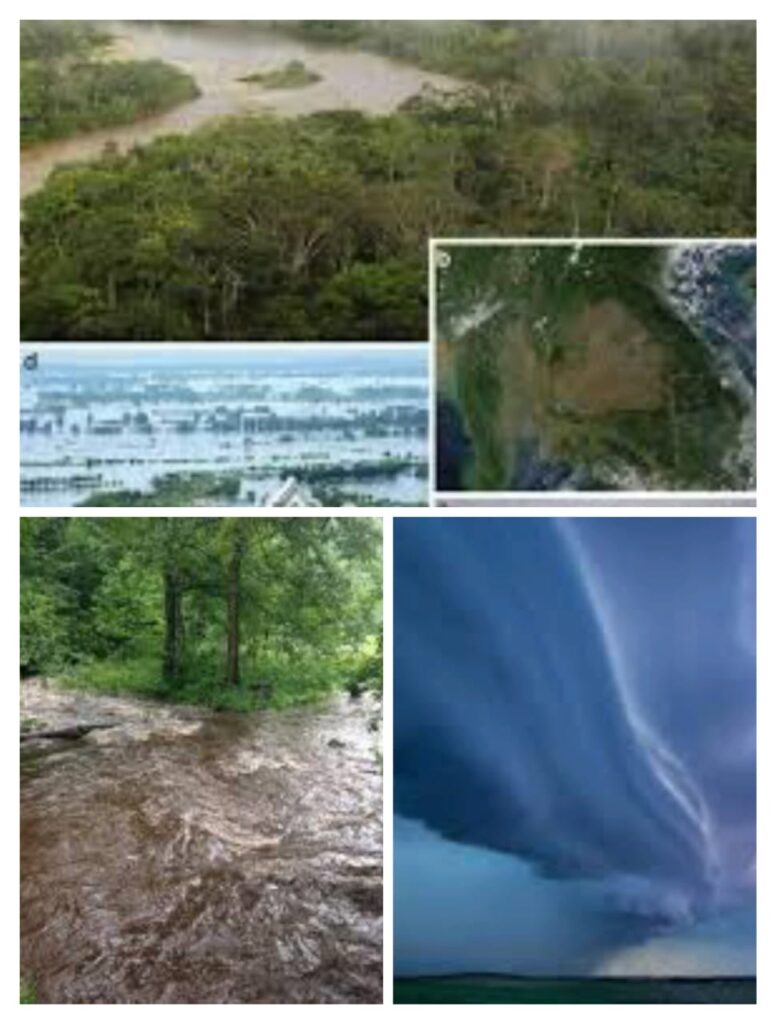
We have already endured a series of catastrophic floods since 2010. We witnessed millions of people displaced in 2010, 2011, 2015, and 2022, yet our response remains lukewarm. These devastating wake-up calls have completely failed to rouse us from our deep slumber. We must heed the advice of elders like Muhammad Akber now, before it is too late and we are left crying over spilled milk.
Mr. Muhammad Akber represents a legendary figure of our times, one who has consistently advocated for prudent and timely action. Although his name is a pseudonym for the purposes of this story, individuals like him can be found in every village and neighborhood, offering the same rational insight and wisdom. His words serve as an ultimate wake-up call. The region is currently enduring the devastating impacts of climate change and unprecedented floods. While time is running out, it is not yet the end of the game. We must all play our part to shield nature from the artificial threats—both known and unknown—that jeopardize our collective future.