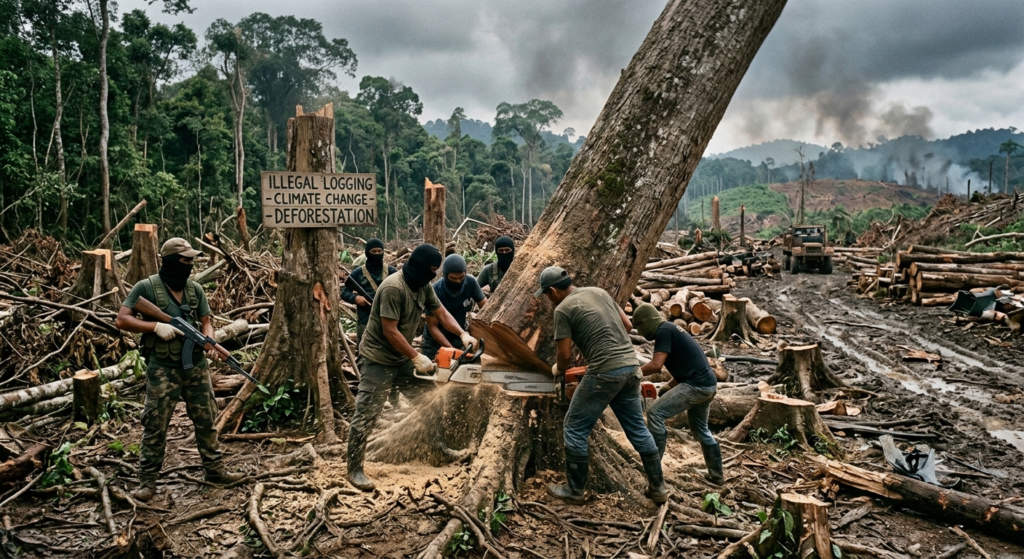
Multoo and his gang frequently engaged in notorious acts, which the public viewed as blatant barbarity and an open defiance of the law. As previously mentioned, local authorities were deeply complicit in the gang’s criminal enterprise, going so far as to provide legal cover for their nefarious activities when needed. For example, the gang would notify the forest department and other local officials of their plans to log trees and the specific routes they would use to transport the timber to vendors. In response, every involved agency, right from forestry and local administration to the police, conspired to create the perfect conditions for the gang to move their illicit goods completely undetected. Despite these activities being brought to light by several journalists and concerned citizens, no action was taken. Although the public had suspected the gang’s criminal operations for years, the complicity of local authorities effectively silenced any dissent. In one notable instance, a courageous journalist managed to film tractors illegally transporting tons of timber, and the investigative blueprint was subsequently published in a leading newspaper, yet it yielded no results. Instead, this exposure severely compromised the safety of the journalist and his family. He was ultimately killed during a raid by the gang, and his family faced years of relentless harassment and eventually migrated and settled in the urban areas of Karachi and since then they have been living a low profile life, far away from spotlight. According to one estimate, the family was asked by the goons of the politician to remain silent, else they would also face the same music as their slain member. This brutal retaliation served as a stark deterrent, ensuring that no one else dared to challenge the gang’s de facto rule.
Years later, Haji Ahmed, a local religious cleric who used to lead congregational prayers, recalled the barbaric nature of the gang members. According to him, the gang would ruthlessly mutilate abductees if their families failed to pay the demanded ransom. Weeping as he recounted one particularly appalling incident, Ahmed spoke of a young girl, roughly six or seven years old, who was kidnapped from Bakhar and held captive in caves for several months. While her abduction was not for ransom, its true motive remains unknown. It was believed to be an attempt to intimidate an insubordinate family. The child was deprived of food and water for days and hidden away in caves and that too beneath cots to prevent detection. Although Ahmed could not confirm if she was subjected to sexual abuse, she eventually disappeared from the camp. He suspected she was either relocated or, more tragically, succumbed to her injuries.
To return to the main focus, the gang members possessed wireless communication devices that were connected to the police satellite network, allowing them to intercept law enforcement transmissions. One officer recounted a specific raid on a criminal hideout, during which the police team was navigating the area with the help of well-known informants via their wireless sets. Surprising to the officers at the time, the gang was listening to every operational discussion in real time. In reality, the gang leader was intentionally baiting the police toward their hideouts. After a day-long cat and mouse chase with the police convoy, security forces successfully neutralized at least nine hardcore criminals. Riding high on this victory, the forces pushed forward relentlessly, stopping only briefly for meals and prayers.
One officer vividly recalled a chilling near miss during this march. While he and a colleague were making their Asr prayers in a remote riverbed (kacha) area away from their main base, an informer urgently radioed in, warning them to flee immediately due to an incoming rocket strike. The officer rushed over and physically dragged his praying colleague away just seconds before a rocket obliterated the spot, missing them by inches. Relieved, they credited their survival to the informer’s timely coordination.
Their relief turned to absolute shock when the voice on the wireless radio asked if they recognized who had just saved them. When they confirmed they thought he was their trusted informer, the voice revealed his true identity: it was Multoo, the very gang leader who had been guiding them into the ambush zone all day. Confused and skeptical, the officers demanded to know why he would allow nine of his own men to be killed if he was in control. Multoo’s chilling reply was simple: he demanded absolute, unquestioning subordination from everyone under his command. He made an exception, however, by pointing out the gangsters who acted as police informers and accomplices to take down him and his crew. He noted that these men had been sacrificed, mockingly telling the police that they could now leave safely since they had achieved their goal. Continuing his taunts, he warned the authorities not to rely blindly on wireless chatter or local informants, as both could easily be compromised and deceptive.
While it may sound like a dramatic work of fiction, the grim reality is that gang members roam fearlessly, capitalizing heavily on modern technology. The ordeal described by police officers highlights a deeply concerning state of affairs: gangsters cut down trees at whim, subject locals to ruthless torture, and coerce families into marrying off their women. This situation exposes severe structural and coordination failures within the security apparatus. It raises critical questions: how do uneducated gang members operate sophisticated technology without detection, and who is supplying these devices? While authorities often blame porous provincial borders, the truth suggests otherwise. If these devices were smuggled from a neighboring province, how did they bypass security checkpoints, especially given that the country has been on high security alert for nearly 25 years? Furthermore, if local gangs can access such advanced technology so easily, the potential access available to international terrorists is deeply alarming. This is an urgent and troubling question that demands answers. ( to be continued………….)